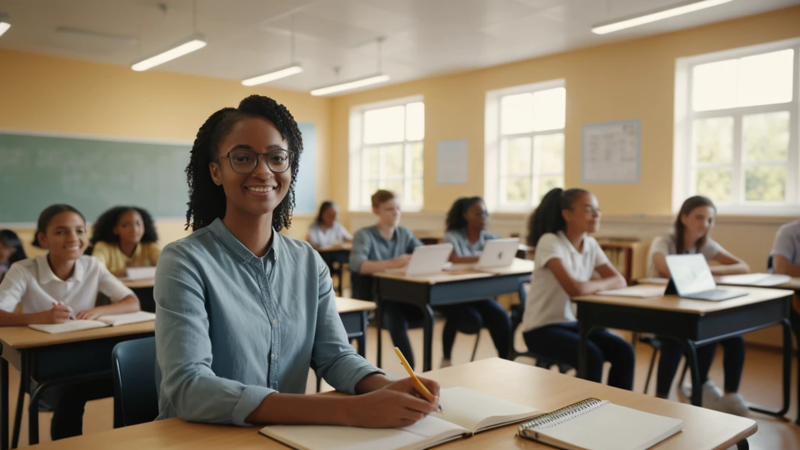
How education policy affects student success and shapes learning outcomes across America. Explore key factors, real examples, and smart solutions to help every student thrive.
Education policy directly influences student success by determining school funding, teacher quality, curriculum standards, and student access to resources. Effective policies close achievement gaps and improve long-term educational outcomes.
How Education Policy Affects Student Success 🎓
Have you ever wondered why some schools seem to have everything — modern classrooms, motivated teachers, and engaged students — while others struggle to stay afloat? 🤔 The answer often lies in education policy.
In simple terms, education policy affects student success by setting the rules for how schools operate, how teachers are trained, and how funding is distributed. The policies we create today shape the kind of education our kids will get tomorrow.
Let’s break it down and explore how smart, fair, and forward-thinking education policies can build a stronger future for every student.
Understanding Education Policy 🏫
Education policy refers to the collection of laws, rules, and regulations that guide how education systems function. It determines everything from teacher qualifications to student testing standards.
In the U.S., these policies exist at federal, state, and local levels, each influencing education differently. Federal laws like the Every Student Succeeds Act (ESSA) set national priorities, while local school boards handle day-to-day decisions.
When policies are clear, inclusive, and fair, schools thrive. When they’re not, inequality widens — and students feel the impact first.
The Connection Between Policy And Student Achievement 📈
Education policy isn’t just paperwork. It shapes what happens in every classroom.
When funding is fair, teachers are supported, and curriculums are relevant, students perform better. Research shows that students in well-funded schools consistently score higher in reading and math compared to those in underfunded districts.
So yes, policy directly affects grades, graduation rates, and even students’ future earnings.
Why Funding Policies Matter 💰
Money matters in education. School funding policies determine how much money each district gets — and where it’s spent.
Underfunded schools struggle with outdated books, overcrowded classes, and limited extracurriculars. Meanwhile, wealthier districts often enjoy better facilities and smaller class sizes.
| Funding Source | Description | Impact on Students |
| Local Taxes | Based on property values | Creates funding inequality |
| State Aid | Balances local differences | Reduces funding gaps |
| Federal Grants | Targets disadvantaged schools | Supports low-income students |
When funding policies prioritize equity over equality, all students — regardless of ZIP code — have a fair shot at success.
Teacher Quality And Training 👩🏫
Teachers are the heart of education. Policies that support teacher recruitment, training, and retention play a major role in student achievement.
Strong policies ensure teachers get ongoing professional development, fair pay, and mentorship opportunities. When teachers feel valued and prepared, they’re more effective — and students benefit directly.
On the flip side, poor teacher support leads to burnout and high turnover, which negatively affects student consistency and motivation.
Curriculum Standards And Relevance 📚
What students learn is just as important as how they learn. Curriculum policies define what subjects are taught, how they’re structured, and what skills are prioritized.
A well-designed curriculum promotes critical thinking, creativity, and real-world application. But if policies fail to evolve, students end up learning outdated material that doesn’t match modern career needs.
That’s why continuous curriculum reform is key to aligning education with the future workforce.
Assessment And Accountability 📊
Standardized testing policies aim to measure student performance and school effectiveness. But when testing becomes excessive, it can create stress for students and teachers alike.
Balanced assessment policies use both tests and classroom evaluations to understand learning progress. The best systems focus on growth, not just grades.
| Assessment Type | Purpose | Benefit |
| Standardized Tests | Compare performance across schools | Measures accountability |
| Formative Assessments | Monitor ongoing progress | Supports personalized learning |
| Performance-Based Tasks | Apply learning to real problems | Builds critical skills |
When assessments focus on improvement rather than punishment, students feel encouraged to grow.
Equity In Education Policy ⚖️
Equity means giving every student what they need to succeed — not giving everyone the same thing.
Policies that promote equity address disparities in race, income, and geography. They ensure that students from low-income or minority backgrounds get access to the same resources as everyone else.
Examples include special education programs, free meal plans, and scholarships for underserved communities.
Access To Technology And Digital Learning 💻
In today’s digital age, education policies must include technology access. During the pandemic, millions of students without internet or laptops fell behind.
Forward-thinking policies now focus on digital inclusion, providing devices and connectivity to all students.
| Policy Focus | Implementation Example | Benefit |
| Digital Equity | Free Wi-Fi zones in rural areas | Closes access gaps |
| EdTech Integration | Online learning platforms | Expands learning opportunities |
| Cybersecurity | Student data protection laws | Keeps learning safe |
When technology becomes a right, not a privilege, every student has the tools to succeed.
Early Childhood Education Policies 🧸
Early education lays the foundation for lifelong learning. Policies that expand preschool and early learning programs boost literacy, emotional development, and social skills.
Kids who attend high-quality preschool are more likely to graduate high school and earn higher wages as adults. That’s why investing in early learning is one of the smartest education policies a country can make.
Special Education Policies 🌈
Students with disabilities deserve the same opportunities as their peers. Policies like the Individuals with Disabilities Education Act (IDEA) guarantee individualized support and accommodations.
Inclusive classrooms not only benefit special needs students but also foster empathy and collaboration among all learners.
Strong enforcement of special education policies ensures that no child is left behind — literally.
School Safety And Student Well-Being 🛡️
A safe environment is essential for learning. Policies that address bullying, mental health, and physical security help students feel protected and focused.
Schools with robust safety and counseling programs report fewer behavioral issues and higher attendance rates.
When students feel cared for, they’re more likely to engage and perform well academically. 💖
Higher Education Policies 🎓
Beyond K–12, higher education policies affect college access, affordability, and completion rates.
Initiatives like federal student aid, tuition caps, and loan forgiveness programs make college more accessible. Policies that support community colleges and trade programs also expand career opportunities for students who don’t follow a traditional four-year path.
Education doesn’t end at graduation — good policy ensures lifelong learning.
Parent And Community Involvement 🤝
Education policies that involve parents and local communities create stronger support networks.
When parents engage in school decision-making, students feel more motivated. Community partnerships also bring mentorship, internships, and real-world experience into schools.
Collaboration between schools and families builds the trust that fuels student success.
How Policy Shapes Educational Innovation 🚀
Progressive policies encourage innovation — from STEM programs to personalized learning models.
When schools have flexibility to try new teaching methods, they adapt faster to modern challenges. Innovation-focused policies also attract creative educators who want to make a real difference.
Education should evolve as fast as the world around it.
The Role Of Politics In Education 🗳️
Let’s be real — politics and education are deeply connected. Policy decisions often depend on political agendas, budgets, and lobbying.
When politics prioritize short-term wins over long-term student success, education suffers. But when leaders work together across party lines, schools become more effective and inclusive.
That’s why informed voting on education issues matters more than ever.
The Future Of Education Policy 🌍
The future of education policy lies in personalization, equity, and technology integration.
Policymakers are beginning to focus more on skills-based learning, mental health support, and hybrid education models. The goal? A system that adapts to each student’s strengths and needs.
Education policy isn’t just about classrooms — it’s about creating opportunities that last a lifetime.
Conclusion: Building A Smarter Future Together 💡
Education policy affects student success at every level — from preschool to college. Fair funding, strong teacher support, updated curriculums, and inclusive access all play a role.
When policies prioritize equity and innovation, students thrive. The next generation deserves not just education — but opportunity. And that starts with the choices we make today.
FAQs
- How do school funding policies impact student performance?
Funding determines the quality of resources, facilities, and teachers. Well-funded schools offer better opportunities and help close achievement gaps among students. - What role does teacher training play in education success?
Ongoing training helps teachers stay updated and confident. Skilled teachers create engaging classrooms that lead to higher student achievement. - Why is equity important in education policy?
Equity ensures every student, regardless of background, has the tools to succeed. It promotes fairness and reduces achievement disparities. - How do technology policies improve learning?
They provide access to digital tools and internet connectivity. This allows students to learn anytime, anywhere — keeping education inclusive. - What future trends will shape education policy?
Expect more focus on personalized learning, mental health, and technology-driven instruction. These trends aim to prepare students for a rapidly changing world.